For a long time, a social media strategy often boiled down to a few main platforms: Facebook to reach the general public, Instagram for visuals, LinkedIn for professionals, YouTube for video, and sometimes X for news. But in recent years the social media landscape has become highly fragmented.
New platforms are emerging, older ones are rebranding, communities are shifting, usage patterns are evolving, and brands don't always know where to focus their efforts. Threads is growing rapidly, Bluesky attracts specific communities, LinkedIn is pushing more personal and professional content, Instagram remains essential for visual content, TikTok dominates short-form video, YouTube Shorts keeps growing, Facebook is still useful for certain audiences, and X maintains a role in the news, debates, and some sectors.
The result: many companies ask the same question. Should we publish everywhere? Should we open an account on Threads or Bluesky? Should we abandon X? Has LinkedIn become indispensable? Is Instagram still enough? And above all, how do you manage multiple networks without wasting time or posting the exact same content everywhere?
In 2026, the right strategy isn’t necessarily to be on every platform. The real question is where your audience is, what type of content you can produce consistently, and how to organize your presence to stay visible without burning out.
In this article, we explain how to understand social media fragmentation, how to choose the right platforms, and how to build a smarter multi-platform strategy.
Social network fragmentation means users' attention is spread across an ever-growing number of platforms. Previously, a few major networks largely dominated usage. Today, users can move from one app to another depending on their needs: entertainment, news, conversation, search, inspiration, shopping, networking, monitoring, or community.
This fragmentation is due to several factors.
First, users no longer necessarily want to do everything in the same place. They may watch videos on TikTok, follow brands on Instagram, chat on Threads, monitor trends on LinkedIn, follow the news on X, join a community on Bluesky, and watch tutorials on YouTube.
Platforms have different identities. TikTok excels at video discovery. Instagram remains strong for imagery, Reels, Stories and visual engagement. LinkedIn has become a space for professional content, but also for personal storytelling. Threads aims to position itself around public conversation tied to Instagram. Bluesky attracts users interested in more open, decentralized, or community-driven exchanges.
Finally, brands must contend with algorithm changes, declining organic reach, new social search habits, and rising advertising costs. They can no longer rely on a single channel.
Many companies build all their visibility on a single platform — for example, only Instagram, only TikTok, or only LinkedIn. That can work for a while, but it’s risky.
A platform can change its algorithm. An account can be suspended. Reach can drop. A feature can disappear. An audience can migrate to another network. A format can become less effective. An ad can cost more.
If all your visibility depends on a single network, you're vulnerable. It's like building a shop on land you don't own. You can attract a lot of people there, but the rules can change overnight.
The solution isn't necessarily to publish everywhere. The solution is to diversify intelligently. It's better to focus on two or three platforms you can manage well than to be present on eight networks with abandoned accounts.
A multi-platform strategy reduces risk, reaches multiple audiences, and intelligently reuses content.
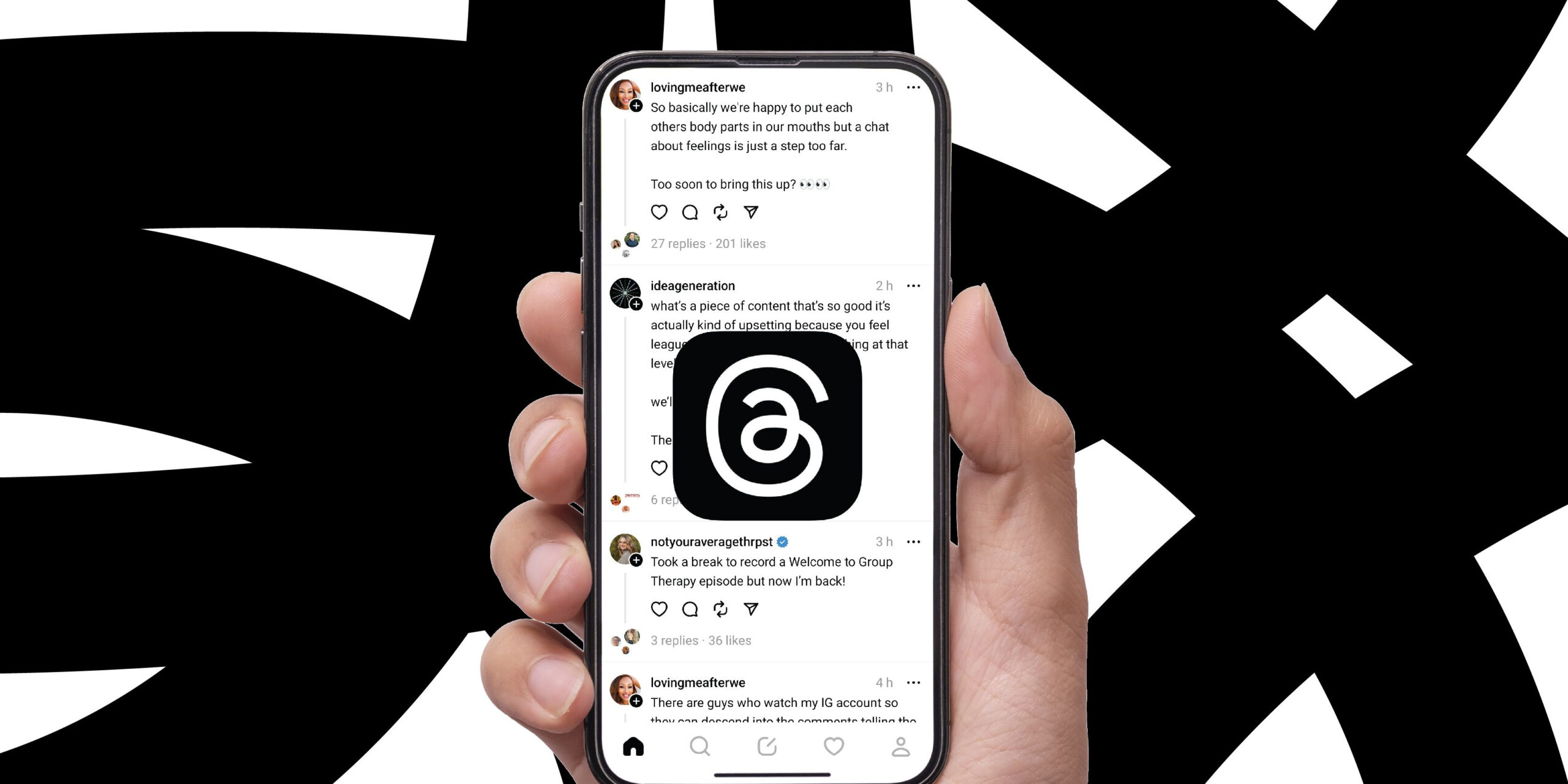
Threads is one of the platforms to watch closely. Connected to the Instagram ecosystem, it positions itself as a public conversation space that is faster and more text-focused than Instagram. Its advantage is clear: it benefits from Meta’s power and a natural connection to Instagram accounts.
For brands, Threads can be useful for posting quick ideas, reacting to the news, asking questions, sharing behind-the-scenes content, sparking conversation, and humanizing communication. Unlike Instagram, where visuals dominate, Threads leaves more room for short text, opinions, reflections, and exchanges.
But Threads shouldn't be used as a simple copy-and-paste of your Instagram posts. The tone should be more direct, more conversational, more human. Users don't necessarily expect a perfect visual; they expect presence, a voice, a reaction, and a sense of closeness.
Examples of content suited to Threads:
Threads can be very useful for brands that want to be part of conversations, not just publish visuals.
Bluesky draws a different audience. The platform is often associated with a more open, decentralized, and community-driven approach. It may appeal to journalists, researchers, creators, developers, experts, tech communities, media, independents, and users looking for an alternative to more traditional networks.
For a brand, Bluesky is not necessarily a priority in every sector. But it can be very worthwhile if your audience is active there. This is particularly true for fields related to tech, digital, culture, media, research, communications, or niche communities.
Bluesky can be used for:
The big advantage of Bluesky is that it can offer a less crowded space than heavily ad-driven networks. But its potential depends heavily on your industry. A local restaurant brand won't necessarily find the same value there as a media outlet, a SaaS tool, or a tech brand.
LinkedIn is no longer just an online résumé. It has become a real content network. Executives, freelancers, agencies, consultants, recruiters, companies, employees, and B2B creators are publishing there more and more regularly.
For a B2B brand, LinkedIn is often essential. But even some B2C brands can find value there for talking about recruitment, behind-the-scenes, values, expertise, partnerships, innovation, or company vision.
Content that performs well on LinkedIn is often more personal and helpful than promotional. Posts that are overly promotional are less effective than first-hand experiences, analyses, tips, company stories, and practical takeaways.
LinkedIn content examples:
LinkedIn calls for a more professional tone, but not necessarily a cold one. Human, sincere, and useful content often finds its place there.
X remains an important platform in certain sectors: news, politics, finance, sports, tech, crypto, media, web culture, public debate, influence, and real-time monitoring. But its usefulness depends heavily on your audience.
For some brands, X remains a fast channel for visibility. For others, the platform has become less of a priority, too polarized, or less suited to their tone. So you shouldn't respond in a one-size-fits-all way. You need to analyze your market.
If your customers, partners, journalists, or competitors are active on X, it can be useful to maintain a presence there. If your audience isn't there, it's better to focus your energy elsewhere.
Content tailored for X should be quick, clear, and responsive. It can be used to share news, links, short opinions, analysis threads, reactions, or curated updates.
But beware: X may require a more frequent presence than other networks. An account that posts only once a month risks being invisible.
Instagram remains a central platform for visual brands, retailers, creators, service providers, fashion and beauty, restaurants, tourism, coaching, real estate, lifestyle, and many local projects.
But Instagram has become more demanding. It's no longer enough to post a nice photo. Reels, stories, carousels, collaborations, private messages, and educational content all play a major role.
Instagram serves several purposes:
The risk on Instagram is focusing only on aesthetics. A pretty post without a clear message isn't always enough. Content must be useful, recognizable, and designed with the audience in mind.
TikTok is still very powerful for discovery. An unknown brand can quickly reach an audience if the content is good. But TikTok has its own rules. Videos that are too promotional, too polished, or too corporate can underperform compared with more natural formats.
TikTok favors fast, useful, authentic, direct, and entertaining content. A brand should accept being less perfect, more spontaneous, and closer to the platform’s norms.
Supported formats:
TikTok can be very effective, but it requires real consistency. Posting a video every two months usually isn't enough.
YouTube Shorts is interesting because it combines two strengths: short-form content and the YouTube ecosystem. Unlike some platforms where content quickly disappears, YouTube can continue to generate views through search, recommendations and existing channels.
For brands that already produce long-form videos, Shorts are an excellent way to repurpose clips. For others, they let you publish quick tips, demonstrations, podcast snippets, short answers, or mini-guides.
YouTube Shorts can be particularly useful for evergreen content:
An effective strategy is to turn an idea into multiple formats: an article, a LinkedIn post, a Reel, a TikTok, a Short, and a short thread.
That's the big question. The answer: yes in principle, no in that form.
The same idea can be used across multiple networks. For example, a social media trend can become:
But you shouldn't publish the exact same text, visual, and tone everywhere. Each platform has its own rules. A LinkedIn post that's too long won't work as-is on Threads. A TikTok video with a very spontaneous style sometimes needs to be adjusted for Instagram. Highly visual content may require more explanatory copy on LinkedIn.
So the right approach is to adapt, not duplicate.
Before opening accounts everywhere, ask yourself the right questions.
Where is my audience located?
What format can I produce regularly?
Am I a visually-driven brand or more of an expert brand?
Is my goal awareness, sales, credibility, or community?
Do I have time to respond to comments?
Which platform is already generating results?
Which platforms are my competitors using?
Which content can I easily repurpose?
What tone is right for my brand?
A local business might favor Instagram, Facebook, and TikTok. A B2B agency might focus on LinkedIn, Threads, and YouTube Shorts. A tech brand might add Bluesky and X. An online shop might use Instagram, TikTok, Facebook, and Pinterest depending on its sector.
There’s no universal answer. There’s a tailored strategy.
Creating an account on a new network may seem simple. But an abandoned account gives a poor impression. If a user comes across your profile and sees that the last post is a year old, they may think the brand is inactive.
It's better not to be on a platform than to have a poor presence there. Before opening an account, make sure you can post regularly for at least three months.
A minimal presence can be enough, but it must be consistent. For example, posting twice a week on LinkedIn is better than posting ten times in January and then disappearing.
The fragmentation of social networks creates a major challenge: organization. The more platforms there are, the harder it becomes to maintain a consistent presence.
AuraPost can help centralize content preparation, adaptation, and scheduling. Instead of rushing to publish on each app, a brand can organize its ideas, draft its copy, adapt formats, and schedule posts in advance.
The goal isn't to mechanically post the same thing everywhere. The goal is to better manage the strategy:
A scheduling tool becomes especially useful when the brand posts on Instagram, Facebook, LinkedIn, Threads, TikTok or other networks. It helps keep an overall view instead of managing each platform separately.
Imagine a company that wants to post on LinkedIn, Instagram, Threads and TikTok.
Monday: LinkedIn post with an expert tip.
Tuesday: Instagram Reel summarizing the tip in video.
Wednesday: Threads post with a question for the community.
Thursday: a more natural TikTok on the same topic.
Friday: Instagram story with a poll.
Saturday: recap carousel.
Sunday: planning for the upcoming week.
With this method, the company doesn't look for seven different ideas. It starts from a main theme and smartly adapts it.
It's more realistic, more effective, and easier to sustain long-term.
In 2026, social networks are more fragmented than ever. Threads, Bluesky, LinkedIn, X, Instagram, TikTok, YouTube Shorts and Facebook don’t all play the same role. Each platform has its own codes, audiences, formats and benefits.
The right strategy isn’t to be everywhere at all costs. It’s about choosing the right platforms, adapting content, posting regularly, and measuring what actually works.
For brands, diversification becomes important. Relying on a single platform is risky. But trying to manage everything without organization can become exhausting.
With a clear method and a tool like AuraPost, it's possible to turn an idea into multiple tailored pieces of content, plan more easily, and maintain a consistent presence across multiple networks.
So the question is not: "Should we post everywhere?"
The real question is: Which networks truly deserve your energy, and how can you use them wisely?
No. It's better to be active and consistent on a few well-chosen platforms than to be present everywhere with abandoned accounts.
Yes, especially for brands that want to spark conversation, share short ideas, react to current events, and humanize their communication.
It depends on the industry. Bluesky can be relevant for tech, media, creators, experts, niche communities, and brands that want to test less saturated spaces.
LinkedIn is primarily strong for B2B, but it can also help brands looking to build credibility, recruit, show behind-the-scenes content, or highlight their expertise.
It's better to reuse the same idea but adapt the format, tone and length for each platform.
AuraPost can help organize, adapt, and schedule posts across multiple social networks to maintain a regular presence without having to publish at the last minute.

