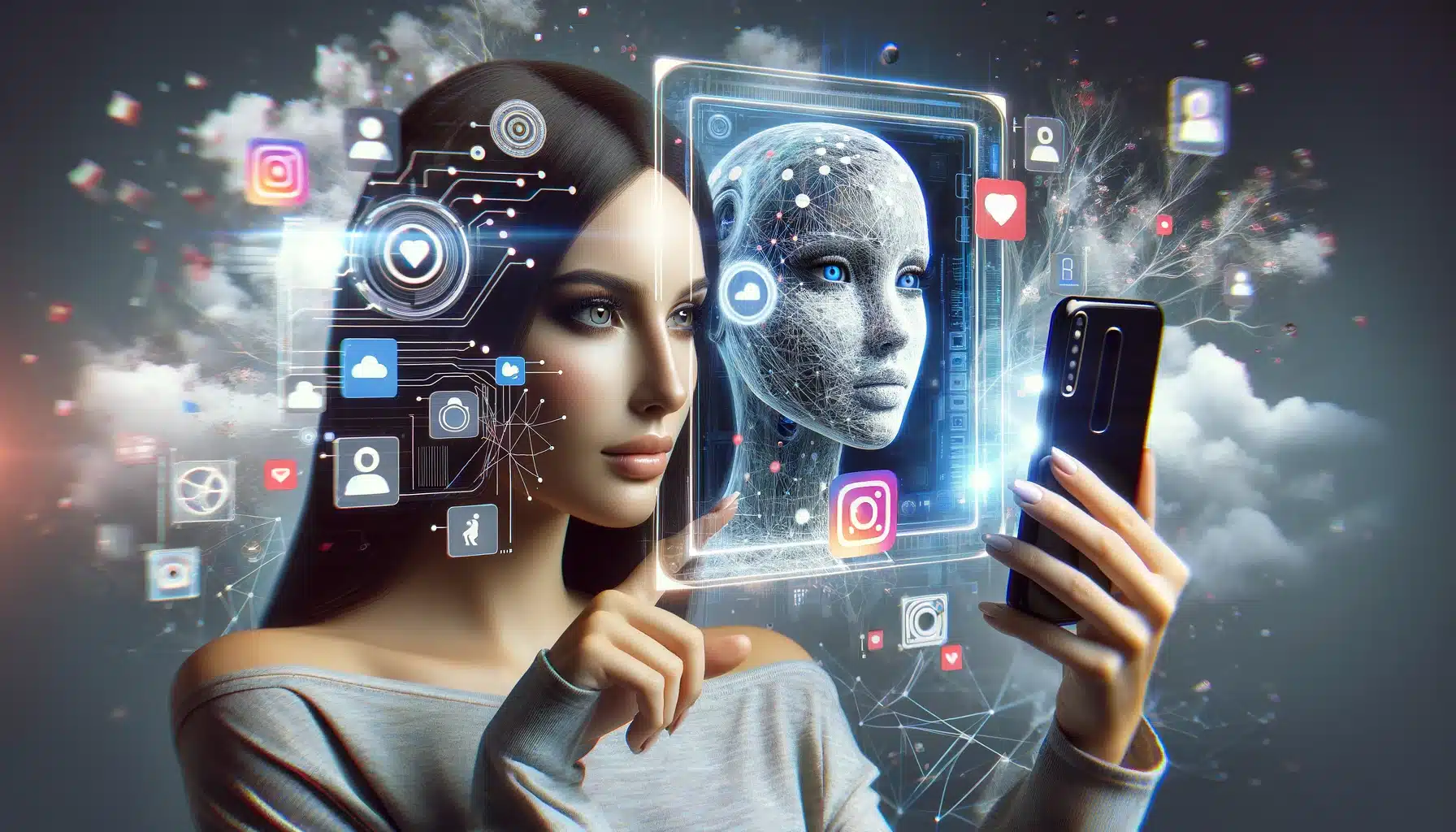
AI influencers are no longer mere technological curiosities. On Instagram, TikTok, YouTube Shorts, Facebook, LinkedIn, or even in ad campaigns, we're seeing ultra-realistic avatars, virtual characters, generated voices, AI models, fictional 'clients', and creators entirely made by artificial intelligence.
For brands, the promise is appealing: create content faster, reduce costs, produce perfect visuals, control brand image, avoid the constraints of photoshoots, adapt posts to multiple languages, and publish more regularly. An AI avatar can wear an outfit, showcase a product, explain a service, appear in a short video, or embody a brand 24/7.
But this trend also raises a crucial question: should you really use AI influencers in your social media strategy? Is it a marketing opportunity or a risk to followers' trust? Is it suitable for all companies? Should content generated by AI be disclosed? And how can you integrate these new formats without creating a false, cold, or misleading impression?
In this article, we explain the benefits, limitations, risks, and best practices for using AI influencers and brand avatars on social media.
An AI influencer is a digital character created wholly or partly with artificial intelligence. They can have a face, a personality, a style, a voice, habits, a backstory, and a regular presence on social media.
Some AI influencers resemble real people. They post photos, videos, stories, recommendations, product reviews, or lifestyle content. Others are intentionally more stylized: a 3D mascot, animated avatar, futuristic character, virtual assistant, or brand ambassador.
There are several levels of use. A brand can create a full avatar that becomes its official representative. It can also use an AI face occasionally for an advertisement, an AI voice for a video, an animated character for tutorials, or a virtual model to present products.
The AI influencer should not be confused with a simple filter or a retouched image. It is often a character created to communicate, embody an identity, and generate engagement.
A brand avatar is a character created to represent a company, a service, a product, or a community. It can be human, semi-realistic, cartoon, futuristic, minimalist, or entirely imaginary.
Unlike a traditional influencer, the brand avatar is owned directly by the company. It can appear in posts, videos, ads, tutorials, replies to comments, customer support, or promotional campaigns.
For example, a cosmetics brand can create an avatar that offers beauty tips. A SaaS company can create a virtual assistant that explains features. A social media agency can use an AI character to break down best posting practices. A site like AuraPost can use an avatar to explain content planning, automation, or common mistakes to avoid on social media.
The point is to create a recognizable face. The avatar becomes a visual anchor. It can strengthen brand consistency and improve memorability.
AI influencers interest brands for one simple reason: they offer almost total control. With a human influencer you must manage a contract, availability, editorial guidelines, scheduling constraints, personal reputation and sometimes unforeseen issues. With an AI avatar, the brand controls the message, the image, the tone, the setting and the posting frequency.
Content creation is also faster. A campaign can be adapted into multiple versions without organizing a full shoot. You can change the outfit, the set, the language, the format, or the message much more easily.
Costs can also be lower, especially for small businesses that don’t have the budget for regular productions. An avatar can be used across dozens of pieces of content: Reels, TikTok, Shorts, carousels, ads, thumbnails, stories, guides, or LinkedIn posts.
Another advantage: consistency. A brand avatar can keep the same appearance, colors, style, and tone for several months. That helps build a strong visual identity.
The first advantage is consistency. Social networks often reward brands that can post consistently. An AI avatar can help produce more content without waiting for a photoshoot, availability, or complex editing.
The second advantage is personalization. The same idea can be adapted for multiple audiences. A brand can create a corporate version for LinkedIn, a more playful version for TikTok, a short version for Instagram Reels and an educational version for YouTube Shorts.
The third benefit is creativity. AI makes it possible to create scenes that are impossible or too costly to film: futuristic sets, virtual offices, 3D environments, animated characters, stylized demonstrations, interactive mascots.
The fourth benefit is rapid testing. A company can test multiple hooks, visuals, formats, and personas before investing in a larger campaign.
The fifth advantage is availability. An avatar doesn't get sick, doesn't change its schedule, and isn't tied to a physical location. For a brand that publishes a lot, it's a real time-saver.
The main risk of AI influencers is loss of trust. Social networks rely heavily on authenticity. Users want to know who is speaking to them, why a product is being recommended, and whether the content is real or staged.
If a brand creates a fake customer who gives an enthusiastic review without disclosing that it’s an AI avatar, the public may feel deceived. Presenting a virtual character as a real person can breed distrust. If a testimonial is artificially generated, the brand’s credibility can be severely damaged.
The issue isn't using AI per se. It's the lack of transparency. An audience may accept an AI avatar if they know it's a brand persona. By contrast, they'll react negatively if they discover the brand deliberately fostered confusion.
Trust is hard to earn and easy to lose. On social media, a campaign perceived as deceptive can quickly spark negative comments, critical shares, and PR backlash.
Yes, as soon as the content could create confusion or give the impression of being real. This is even more important if the avatar gives an opinion, recommends a product, imitates a person, discusses a sensitive topic, or presents an experience as if it actually happened.
Transparency becomes a strategic rule, not just a regulatory one. Even when a legal requirement hasn't yet been clearly applied to every case, it's better to be honest with your audience.
A simple disclosure may suffice depending on the context:
The goal is not to scare the public. The goal is to clarify the nature of the content. A transparent brand can even turn this disclosure into an advantage: it shows it is innovating while respecting its followers.
The two options do not serve the same role. A real influencer brings a community, a personality, lived experience, a relationship with their audience, and personal credibility. They can test a product, share their impressions, demonstrate actual use, and interact naturally with their followers.
An AI influencer primarily brings control, flexibility, creativity and consistency. It’s useful for embodying a brand, producing educational content, creating visuals, hosting a series, or testing formats.
For campaigns focused on trust, a human creator is often more effective. For branding, demonstration, or ongoing content campaigns, an AI avatar can be very effective.
The best strategy can be hybrid. A brand can use an AI avatar for recurring content and collaborate with real creators for testimonials, product tests, real demonstrations and influencer campaigns.
AI avatars can be useful across multiple industries.
In tech, they can explain software, showcase new releases, break down features, or run tutorials.
In training, they can introduce lessons, summarize modules, or present quick tips.
In fashion, they can show styles, colors, inspiration or looks, provided they don't mislead about the actual product.
In beauty, they can showcase routines, but you should be cautious with AI-generated visual results.
In real estate, they can offer tips, outline the buying steps, or create educational content.
In services, they can become brand assistants that answer frequently asked questions.
For AuraPost, an avatar can be used to explain multi-platform posting, content organization, scheduling mistakes, caption creation, short-form formats, or social media strategy.
Some areas require more caution. Health, finance, law, food, politics, child education or other sensitive topics should not use AI avatars in an ambiguous way.
If an avatar offers medical, financial, or legal advice, its limitations must be made extremely clear. A brand must not give the impression that an AI character replaces a qualified expert.
You also need to watch out for fake before-and-after images. In beauty, fitness, weight loss, or cosmetic surgery, AI visuals can create unrealistic expectations. That can undermine trust and raise ethical issues.
The rule is simple: the more a topic influences an important decision, the greater the transparency should be.
Creating an avatar isn't just about generating a pretty face. You need to build a complete identity.
Before creating the avatar, define:
An avatar that’s too generic won’t be memorable. It needs to be aligned with the brand. A premium company won’t necessarily use the same style as a young, humorous brand. A B2B agency will need a more professional avatar than an entertainment brand.
Also think about consistency across platforms. Your avatar should be recognizable on Instagram, TikTok, LinkedIn, Facebook and YouTube Shorts.
A brand avatar works better when it becomes a recurring format. It shouldn’t show up once and then vanish. It can become a regular editorial fixture.
For example:
monday: quick tip from the avatar;
Wednesday: mistake to avoid;
Friday: answer to a customer question;
sunday: week in review.
The avatar can also anchor a series:
The social media tip of the day
One mistake to avoid on Instagram
Keyword of the week
Before you publish, check this.
What your brand should stop doing
This repetition helps the audience recognize the format. It also makes content production easier. Instead of looking for a completely new idea every day, the brand develops variations on a strong concept.
Authenticity doesn't only come from content being filmed with a real camera. It also comes from clarity, usefulness, tone, transparency, and consistency.
A brand can use an AI avatar while remaining authentic if it doesn't lie about the nature of the content, if it provides real value, and if it keeps a human voice behind the strategy.
For that, avoid scripts that are too generic. The avatar should speak like the brand. It should answer real customer questions. It should address real problems. It should fit into a clear strategy.
AI should not replace understanding of your audience. It should help you communicate more effectively.
AI influencers will likely become more common. Tools are becoming more accessible, visuals more realistic, and brands more curious. But that doesn't mean all content will need to be artificial.
On the contrary, as AI advances, the human element becomes increasingly important. Followers will look for brands that can use technology intelligently without losing their authenticity.
AI avatars can become very useful tools for explaining, illustrating, entertaining and publishing more regularly. But they should not replace real customers, real reviews, real teams and real experiences.
The winning brand will be the one that uses AI to improve its communication, not to deceive its audience.
AI influencers and brand avatars represent a real opportunity for social media. They enable faster content creation, testing of new formats, stronger visual identity, and more consistent publishing.
But their use requires caution. Transparency, trust and authenticity must remain at the heart of the strategy. An AI avatar can be effective if it's clearly presented as a virtual character, if it provides real value and if it respects audience expectations.
For a company, the right question is not just: "Can we create an AI influencer?" The real question is: "What useful role will this avatar play in our content strategy?"
When used well, an AI avatar can become a powerful asset. Misused, it can undermine a brand’s credibility. The difference lies in transparency, content quality, and editorial consistency.

