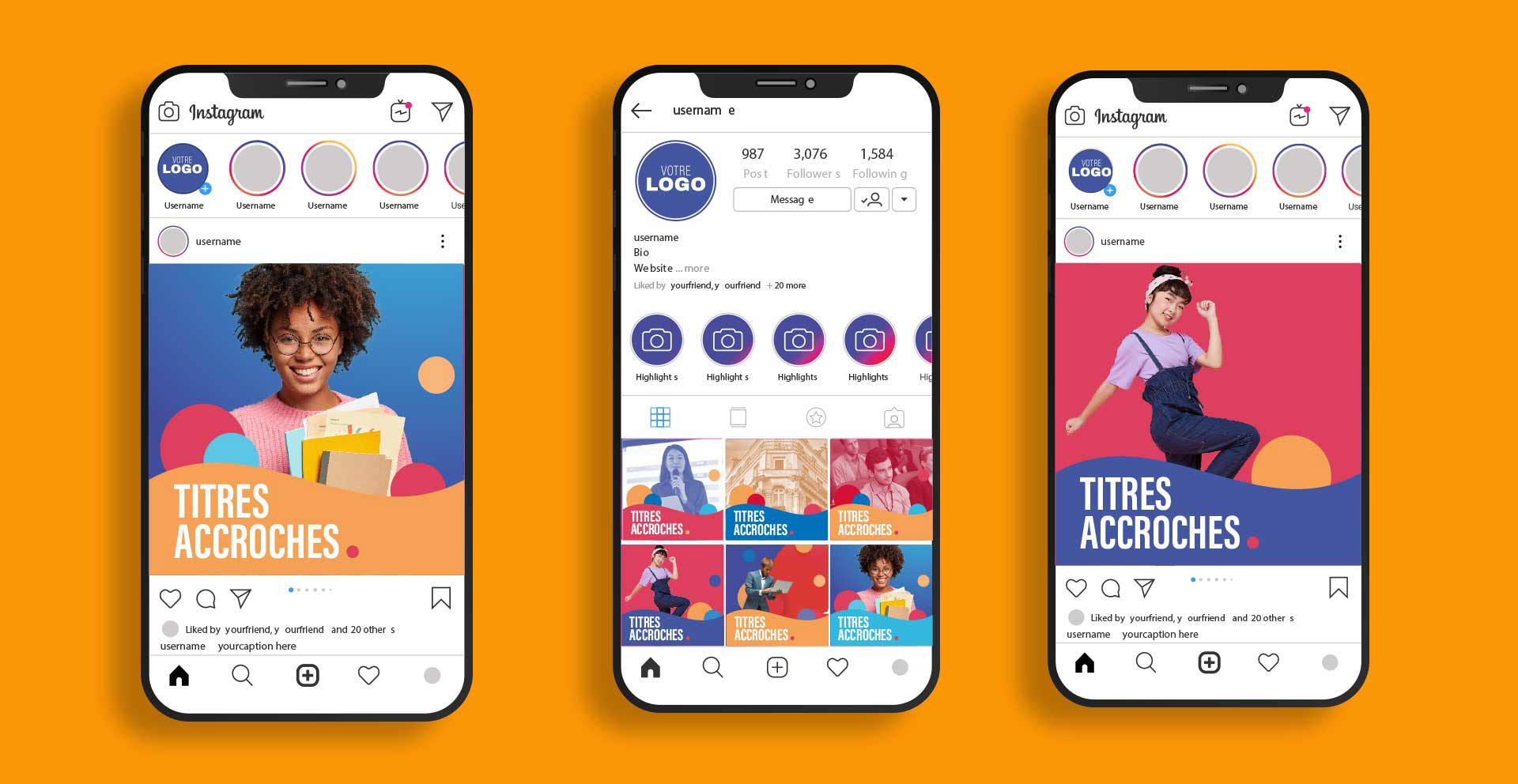
Why are some brands immediately recognizable on social media even when their logo isn’t visible? The answer often lies in their editorial guidelines. Their vocabulary, tone, topics, formats, and the way they reply to comments remain consistent from one post to the next.
Conversely, an account without an editorial line quickly feels chaotic. One post is very professional, the next resorts to forced humor, then the account goes silent for weeks before publishing a promotion with no context.
The editorial charter prevents ad‑hoc communication. It provides a clear framework for the people who create, approve, and publish content. It also makes AI tools easier to use, since they perform better when given precise instructions about the brand.
Here's how to build a content charter for Instagram, Facebook, LinkedIn, TikTok, and other social networks, with a practical method and an easy-to-adapt template.
An editorial charter is a document that defines how a brand communicates. It specifies the people it addresses, the messages it wants to convey, the topics it can cover, and the tone it should use.
It also includes practical rules on writing captions, post formats, calls-to-action, hashtags, and comment moderation.
The editorial guidelines should not be confused with the visual identity guidelines. The visual identity guidelines define colors, typefaces, the logo and the visual appearance. The editorial guidelines organise the words, messages and the brand’s personality. The two documents are complementary.
A good set of guidelines should answer several questions:
At the start of a project, a single person often manages social media. They know the business, the customers, and the brand's personality. The communication rules stay in their head and seem obvious.
Problems arise when a company hires a community manager, works with an agency, or assigns content creation to multiple team members. Without a shared document, each person interprets the brand in their own way.
An editorial charter allows you to :
The document must not stifle creativity. It serves as a compass so that new ideas remain compatible with the company's identity and objectives.
An effective editorial charter starts with clear objectives. A company should not publish simply because its competitors have an Instagram or LinkedIn account.
Your social media presence can serve different goals:
Choose one main objective and a few secondary objectives. This hierarchy will help you decide which content to publish. If your priority is generating quote requests, your calendar should include demos, results, testimonials and answers to objections.
Writing for "everyone" often leads to generic messages. A post becomes more compelling when it describes a situation the reader immediately recognizes.
To define your audience, don't limit yourself to age, job, or city. Focus primarily on their problems, motivations, and level of knowledge.
Ask yourself the following questions:
A company can have multiple audiences. In that case, create a simple profile for each persona and specify the content intended for it. However, be careful not to multiply personas unnecessarily, as this may make the strategy impossible to implement.
Tone matches the way the brand speaks. It should reflect its personality while remaining appropriate to its audience and industry.
A brand can be:
Avoid vague expressions like 'modern and professional tone.' Instead, provide concrete examples of allowed and discouraged phrasing.
For example, a brand that wants to stay approachable could write: “Short on time to prepare your posts? Here’s a simple method.” It should avoid overly technical phrasing like: “Optimize your workflow with an omnichannel editorial production methodology.”
Also specify whether the brand uses informal or formal address with its audience. Switching between the two without reason creates an impression of inconsistency.
Vocabulary directly contributes to editorial identity. Some companies use simple, educational terms. Others address an expert audience and may use more technical vocabulary.
Your charter can include three lists:
A social media management platform may, for example, favor the terms “prepare,” “plan,” “approve,” and “publish.” It might avoid promises like “go viral in seconds” or “automatically gain thousands of followers,” because they don’t reflect a realistic strategy.
Add rules regarding abbreviations, anglicisms, emojis, capitalization and punctuation. These details let multiple writers produce text that feels like it was written in a single voice.
Content pillars are the main themes your brand will cover regularly. They prevent the calendar from becoming a series of improvised or purely promotional posts.
A company can adopt between three and six pillars. For example, a brand specializing in sports might choose:
For AuraPost, the pillars could include editorial strategy, automation, content creation, platform-specific best practices, and the results companies achieve.
Each pillar should be directly linked to the audience's needs and the brand's activities. A topic can generate many views without attracting the right people. Relevance matters more than visibility that's unrelated to your offering.
To store and categorize your future topics, also learn how to build a social media content idea library.
An editorial identity should remain recognizable across all platforms, but that doesn't mean you should publish exactly the same content everywhere. Each platform has its own conventions, formats, and audience expectations.
Instagram is suited to visual content, Reels, carousels, and Stories. Posts should be easy to understand, pleasant to browse, and structured enough to hold attention.
The style guide should specify the tone of hooks, typical caption length, emoji placement, calls to action, and rules for hashtags.
LinkedIn lends itself to firsthand accounts, analyses, professional advice, and well-argued positions. A professional tone doesn't have to use impersonal phrasing. Personal stories, nuanced opinions, and concrete examples often make posts more engaging.
On TikTok, the main idea must be grasped very quickly. The style guide can specify video structure, the style of the opening seconds, how to use trends, and the allowed level of humor.
Facebook allows publishing videos, news, events, offers, and community content. The charter should distinguish between page posts, group messages, and replies to customers.
The core idea should stay the same, but its presentation must be adapted. A detailed guide posted on LinkedIn can become an Instagram carousel, a TikTok demo, and a Facebook post with a link.
The editorial guidelines should specify the formats used by the brand. This list helps the team vary posts while staying within a consistent framework.
For each format, state its purpose. A short video can attract new viewers, a carousel can explain a method, a testimonial can reassure, and a Story can create a more spontaneous interaction.
The hook must give a clear reason to keep reading or to watch the video. It can present a problem, announce a result, or ask a specific question.
Some structures can be incorporated into the guidelines:
The call to action should be directly related to the post. Avoid asking people to comment, share, save, follow the account, and buy a product all at once. One primary action is enough.
You can invite the person to save the guide, answer a question, visit a page, request a demo, or send a message. The guidelines can include a list of calls to action tailored to each objective.
Hashtags should be chosen based on the topic, industry, and target audience. Copying a long list of generic words under every post is not a strategy.
Your charter can define several groups:
The list should remain flexible. Words that are relevant on Instagram aren’t necessarily suitable for LinkedIn or TikTok. Check our guide to learn how to choose your hashtags on Instagram, TikTok and LinkedIn.
A brand's personality also shows in its replies. Warm communication in posts followed by cold or aggressive responses in the comments quickly destroys editorial consistency.
The charter should specify how to handle:
Plan for situations that require a public reply, a move to private message, or escalation to a manager. Prepared responses can save time, but they should be personalized before sending.
Artificial intelligence can suggest ideas, summarize a document, draft an initial caption, or adapt text for multiple platforms. Without editorial guidelines, however, the result may feel generic and interchangeable.
To govern its use, specify:
The editorial guidelines can be included in the instructions given to the writing assistant. This way, it knows the brand's tone, audience, objectives, and content pillars.
The features of AuraPost allow you to centralize the preparation, scheduling and publishing of content to maintain more consistent communication across multiple channels.
An editorial charter should explain who is involved at each stage. Without a defined process, posts remain pending, corrections multiply, and some information is published without approval.
A simple workflow can include:
Set a deadline for each step and identify content that requires special approval. A major commercial announcement or a crisis response should not follow exactly the same workflow as a simple behind-the-scenes Story.
You can use the following structure to create your own document:
Brand: [nom de l’entreprise]
Primary goal: [résultat recherché]
Target audience: [personnes, besoins et questions fréquentes]
Three to six recurring themes: [thèmes]
Tone and vocabulary: [tutoiement ou vouvoiement, mots à privilégier et à éviter]
Networks and formats: [plateforme, type de contenu et fréquence réaliste]
Primary call to action: [action attendue]
Validation: [personne responsable et délai]
Moderation: [qui répond aux commentaires et quand transmettre une demande sensible]
Measure : [deux ou trois indicateurs liés à l’objectif]
First fill out this template on a page. Then add two examples of posts that comply with your guidelines: one educational, the other promotional. This will give your team concrete instructions and examples for writing.
Let’s take the example of an independent restaurant looking to attract more local customers.
Thanks to this framework, a photographer, a community manager, or a team member can quickly understand the type of content expected.
Editorial guidelines are not set in stone. They should evolve based on results, changes within the company, and audience reactions.
Pay particular attention to:
Don't change your entire strategy after a single low-performing post. Analyze several weeks of content and look for trends. A topic may get fewer views but attract more qualified customers.
Schedule a review of the charter every three to six months. Remove rules that have become obsolete, add new formats and keep examples that actually worked.
The first mistake is creating a document that's too long for anyone to consult. A useful charter should be specific, clear, and easy to scan.
Also avoid:
Creating editorial guidelines is the first step. You must then apply them weekly, even when multiple people are involved in producing content.
AuraPost allows you to centralize ideas, content, social media and publishing settings in one place. The team can prepare copy, organize the calendar and maintain consistent communication without creating multiple scattered documents.
AI-assisted writing can rely on the tone, templates, and personas defined by the brand. Content can then be verified, approved, and scheduled according to the chosen workflow.
This automation does not replace your editorial strategy. It helps execute it better, reduces repetitive tasks, and frees up more time for creativity, interactions, and results analysis. Companies that want to compare the available plans can consult the options. AuraPost offers.
The editorial direction represents the overall orientation of communication: audience, topics, messages, and tone. The editorial guidelines formalize this orientation in a document containing rules and concrete examples.
Between three and six pillars is usually enough. Too many will scatter your messaging, while a single theme can make the account feel repetitive.
The identity, values and overall tone should remain consistent. However, length, pace and formats should be adapted to Instagram, TikTok, Facebook or LinkedIn.
Yes. The charter even provides an excellent basis for guiding assisted writing. Generated content must, however, be reviewed, corrected, and adapted before publication.
A check every three to six months keeps the document relevant. An update is also necessary when the company changes positioning, launches a new offering, or joins a new platform.
An editorial charter turns isolated posts into coherent communication. It helps the brand maintain a recognizable personality, better allocate topics and speed up content production.
Start simple: define your objective, audience, tone, content pillars, and primary formats. Then add example phrasings, moderation rules, and an approval workflow.
The document can evolve with your company. The key is that it continues to be used by the people who create and publish content. Combined with a clear calendar and a scheduling solution, your editorial charter becomes a real tool for recognition, consistency and performance on social media.

